
Best VLSI Projects for CSE Students in 2025
October 28, 2025
Innovative ECE Engineering Projects for Today’s Students
December 4, 2025
Data mining is a powerful field focused on discovering hidden patterns and insights from large volumes of data. It has become essential for IEEE students exploring technologies like machine learning and data analytics. Selecting an innovative datamining project helps students develop technical expertise and solve practical challenges faced across industries.
A well-chosen datamining project enhances analytical thinking and strengthens research opportunities in IEEE domains.
Table of Contents
6 Data mining Project Ideas
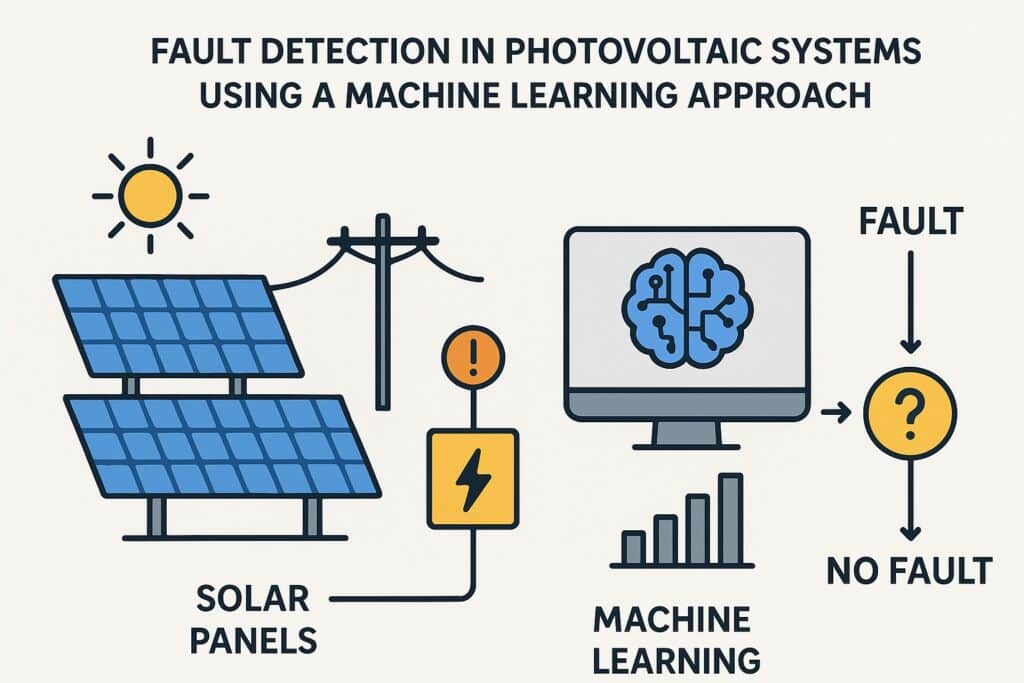
Fault Detection in Photovoltaic Systems Using a Machine Learning Approach
Problem Statement
- Photovoltaic (PV) systems are vital for renewable energy generation but often suffer from faults like shading, disconnections, and inverter failures, reducing efficiency.
- Manual fault detection is slow and ineffective, causing energy loss and system downtime.
- This datamining project applies machine learning and predictive analytics to automatically detect faults, enhance accuracy, and ensure reliable PV system performance.
Expected Outcome
The expected outcome of this datamining project is to design and develop a robust fault detection model that automatically identifies potential failures in photovoltaic systems using machine learning techniques. By processing and interpreting large volumes of data from sensors and energy meters, the model can classify various types of faults—such as partial shading and inverter malfunctions—precisely. The use of supervised and unsupervised learning methods enables continuous system monitoring and predictive maintenance.
As a result, the proposed system significantly reduces downtime and enhances overall energy production.
IEEE Relevance / Research Scope
This project holds strong relevance in the IEEE research community as it bridges renewable energy engineering and intelligent computing. The integration of data mining and machine learning aligns with IEEE’s efforts to promote innovation in sustainable energy technologies. The research scope includes algorithm optimization and energy prediction frameworks. Students can experiment with various techniques to enhance the fault detection process.
In conclusion, the Fault Detection in Photovoltaic Systems Using a Machine Learning Approach stands out as an innovative datamining project that contributes to advancing renewable energy systems. It not only helps detect faults at an early stage but also promotes proactive system maintenance. The model’s adaptability, precision, and scalability make it suitable for both small-scale and industrial solar farms. For IEEE students, this project offers an excellent opportunity to explore machine learning applications in energy systems while addressing real-world sustainability challenges. By leveraging data-driven fault detection, this datamining project strengthens the future of smart and efficient renewable power generation.
Semi-Supervised Building Footprint Extraction Using Debiased Pseudo-Labels
Problem Statement
- Accurate building footprint extraction is critical for urban planning, disaster management, and smart city development.
- Traditional methods rely on manual digitization of satellite images, which is time-consuming and prone to errors.
- This datamining project applies machine learning and semi-supervised techniques to extract building footprints efficiently using debiased pseudo-labels from satellite imagery.
Expected Outcome
The primary goal of this datamining project is to develop a semi-supervised machine learning model capable of accurately identifying and extracting building footprints from high-resolution satellite images. By leveraging debiased pseudo-labels, the model reduces labeling errors and improves prediction accuracy even with limited annotated data. The expected outcomes include:
- High-precision mapping of urban areas with minimal human intervention.
- Scalable models that can process large-scale satellite imagery efficiently.
- Improved data quality for urban analytics, smart city planning, and environmental monitoring.
- Creation of a reusable framework for future building footprint extraction projects, enhancing both research and practical applications.
Research Scope
This datamining project is highly relevant in IEEE research domains, particularly in geospatial analytics and artificial intelligence. The integration of semi-supervised learning demonstrates innovation in handling large-scale datasets, which is a critical challenge in the field.
The research scope includes:
- Exploring advanced machine learning and data mining techniques for image analysis.
- Applying feature extraction and classification algorithms to enhance model accuracy.
- Evaluating the impact of debiasing techniques on the quality of building footprint extraction.
- Potential application in smart city infrastructure, urban planning, disaster response, and geographic information systems (GIS).
This datamining project also promotes interdisciplinary learning by combining concepts from data mining, remote sensing, and computer vision. Students can experiment with convolutional neural networks, graph-based learning, and semi-supervised frameworks to improve building detection performance. By addressing challenges such as limited labeled data and noise in satellite imagery, this project offers a practical solution that aligns with current IEEE standards for urban technology research.
Overall, Semi-Supervised Building Footprint Extraction Using Debiased Pseudo-Labels is a cutting-edge datamining project idea merging innovation with practical applications. It provides IEEE students an opportunity to explore modern machine learning approaches and contribute to smart city initiatives. By implementing this datamining project, students gain valuable experience in solving complex urban challenges.
A Survey of Ransomware Detection Methods
Problem Statement
- Ransomware attacks have become a major cybersecurity threat, targeting organizations and individuals with data encryption and financial demands.
- Existing detection methods vary widely, making it difficult to identify the most effective strategies for real-world applications.
- This datamining project conducts a comprehensive survey and analysis of ransomware detection models using machine learning and data mining techniques.
Expected Outcome
The primary goal of this datamining project is to provide a detailed comparative analysis of existing ransomware detection methods, highlighting their strengths, weaknesses, and performance metrics. By systematically evaluating various classification algorithms, the project aims to:

- Identify the most accurate and efficient models for detecting ransomware attacks.
- Provide insights into the applicability of different datamining techniques in cybersecurity.
- Develop a framework for evaluating and improving future ransomware detection systems.
- Offer recommendations for integrating advanced machine learning approaches to enhance threat detection and response.
The project will also create a structured dataset of ransomware behaviors and features, which can serve as a reference for future research. Students will learn to apply data preprocessing, feature extraction, and classification techniques to real-world cybersecurity problems, making this datamining project both practical and academically valuable.
Research Scope
This datamining project holds significant relevance in IEEE cybersecurity research, particularly in areas involving machine learning, intrusion detection, and intelligent threat mitigation. The research scope includes:
- Surveying existing ransomware detection algorithms, including signature-based, behavior-based, and hybrid methods.
- Applying datamining techniques to analyze and compare the performance of different detection models.
- Exploring machine learning algorithms such as decision trees, support vector machines, neural networks, and ensemble methods for ransomware classification.
- Evaluating detection accuracy, false-positive rates, and computational efficiency to determine optimal solutions for real-world cybersecurity challenges.
By conducting a datamining-based survey, students gain a deep understanding of ransomware patterns, attack vectors, and detection strategies. This knowledge equips them to contribute to advanced cybersecurity research, develop intelligent defense systems, and implement proactive measures against cyber threats.
Overall, A Survey of Ransomware Detection Methods is an ideal datamining project for students interested in cybersecurity research. It combines analytical rigor, practical problem-solving, and machine learning expertise, offering opportunities to publish research findings and develop industry-relevant skills. By completing this datamining project, students will enhance their technical proficiency, gain hands-on experience in threat detection, and contribute to securing digital infrastructures against evolving ransomware threats.
Weak–Strong Graph Contrastive Learning Neural Network for Hyperspectral Image Classification
Problem Statement
- Hyperspectral imaging generates high-dimensional data that requires advanced techniques for accurate classification in applications like environmental monitoring and agriculture.
- Traditional image classification methods struggle to capture complex spectral-spatial relationships, leading to suboptimal performance.
- This datamining project applies a weak–strong graph contrastive learning neural network to extract meaningful features and improve hyperspectral image classification accuracy.
Expected Outcome
The main objective of this datamining project is to develop a neural network model that leverages graph contrastive learning to classify hyperspectral images efficiently. The expected outcomes include:
- High-accuracy classification of hyperspectral datasets by capturing both weak and strong spectral relationships.
- Improved feature representation through graph-based learning, enabling better distinction between similar classes.
- Scalable solutions for environmental monitoring, precision agriculture, and remote sensing applications.
- A reusable framework for future hyperspectral image classification projects, providing guidance for implementing graph-based datamining techniques.
By integrating graph contrastive learning, the project ensures that the neural network can learn from limited labeled data while maintaining high performance. This approach reduces reliance on extensive datasets, making it suitable for real-world scenarios where labeling is expensive or time-consuming.
Research Scope
This datamining project is highly relevant to IEEE research areas in artificial intelligence, machine learning, and remote sensing. It demonstrates innovation by combining graph-based learning with contrastive techniques to handle high-dimensional image data effectively. The research scope includes:
- Designing a neural network architecture that integrates weak–strong graph contrastive learning for feature extraction.
- Applying datamining methods to analyze spectral-spatial correlations in hyperspectral images.
- Evaluating the model using standard hyperspectral datasets, considering metrics such as classification accuracy, precision, recall, and computational efficiency.
- Exploring applications in environmental monitoring, smart agriculture, land cover mapping, and disaster assessment.
This datamining project also offers IEEE students an opportunity to work on cutting-edge AI-integrated image processing techniques. By experimenting with graph-based models and contrastive learning, students can enhance their understanding of deep learning frameworks, data preprocessing, and high-dimensional data analysis.
Overall, Weak–Strong Graph Contrastive Learning Neural Network for Hyperspectral Image Classification is an advanced datamining project that combines machine learning innovation with practical applications in remote sensing and environmental monitoring. It equips IEEE students with essential skills in AI-driven datamining, enabling them to develop intelligent solutions for high-dimensional image data. By completing this datamining project, students gain expertise in graph neural networks, contrastive learning techniques, and hyperspectral image analytics, preparing them for future research and industry opportunities in AI and remote sensing domains.
Ensuring Zero Trust Security in Consumer IoT Using Federated Learning-Based Attack Detection Model
Problem Statement
- The rapid growth of consumer IoT devices has increased exposure to cyber threats, making security a major concern.
- Traditional centralized security models are often ineffective, as they require sharing sensitive data, which raises privacy issues.
- This datamining project leverages federated learning within a zero-trust architecture to detect attacks on IoT networks while preserving user privacy.
Expected Outcome
The primary aim of this datamining project is to design a robust attack detection system for consumer IoT networks using federated learning. Expected outcomes include:
- Real-time detection of cyber threats on IoT devices without centralized data collection, ensuring user privacy.
- Implementation of a zero-trust security model where every device interaction is authenticated and verified.
- A scalable framework capable of adapting to various smart home devices and IoT network topologies.
- Improved overall security, reduced vulnerability to attacks, and enhanced trust in consumer IoT systems.
The system uses data mining techniques to analyze network traffic and device behavior patterns, identifying anomalies that indicate potential attacks. Machine learning models are trained across distributed devices, allowing each device to learn locally while contributing to a global attack detection model. This approach ensures that sensitive data never leaves the device, addressing both security and privacy challenges effectively.
Research Scope

This datamining project is highly relevant to IEEE research areas in cybersecurity, IoT, and AI-driven networks. The project combines federated learning, zero-trust security, and data mining to provide an innovative solution for emerging IoT threats. The research scope includes:
- Designing federated learning algorithms to detect anomalous behavior across heterogeneous IoT devices.
- Applying datamining methods to analyze large-scale IoT network data for attack pattern recognition.
- Evaluating system performance in terms of detection accuracy, false-positive rate, and computational efficiency.
- Implementing a zero-trust framework to authenticate and validate all interactions in the IoT network.
Students working on this datamining project gain hands-on experience with AI-integrated cybersecurity solutions for IoT environments. They explore anomaly detection, machine learning model training, and decentralized learning techniques, which are critical for modern IoT security research. Additionally, the project encourages understanding of real-world constraints such as device heterogeneity, network latency, and data privacy regulations.
Overall, Ensuring Zero Trust Security in Consumer IoT Using Federated Learning-Based Attack Detection Model is an innovative datamining project idea that addresses the critical need for secure IoT networks. It equips students with essential skills in AI, cybersecurity, and distributed datamining, while contributing to cutting-edge research in IEEE domains. By implementing this datamining project, students gain valuable expertise in developing intelligent, privacy-aware security solutions for the growing ecosystem of connected devices.
The Impact of Aging on an FPGA-based Physical Unclonable Function
Problem Statement
- Physical Unclonable Functions (PUFs) are widely used in hardware security to generate unique identifiers for devices, ensuring secure authentication and encryption.
- Over time, aging effects in FPGAs can alter the behavior of PUFs, leading to potential reliability and security issues.
- This datamining project focuses on predicting the impact of aging on FPGA-based PUFs using data-driven modeling to ensure long-term device security and stability.
Expected Outcome
The primary objective of this datamining project is to develop a predictive model that assesses how aging affects the reliability and uniqueness of FPGA-based PUFs. The expected outcomes include:
- Accurate prediction of performance degradation and behavioral shifts in PUF responses due to device aging.
- Enhanced reliability and security of hardware-based authentication systems by identifying potential vulnerabilities before failure.
- A framework for long-term monitoring and analysis of FPGA devices, supporting secure design practices.
- Practical insights for embedded system developers to implement durable and resilient hardware security solutions.
The project uses datamining techniques to analyze aging patterns, temperature effects, and operational stress on FPGA circuits. By leveraging historical performance data and environmental factors, the model can forecast potential deviations in PUF outputs, ensuring that hardware security mechanisms remain effective throughout the device’s lifecycle.
Research Scope
This datamining project is highly relevant for IEEE students specializing in embedded systems, VLSI design, and hardware security. It combines advanced data analysis with hardware-level research, making it suitable for publication and further study in IEEE journals and conferences. The research scope includes:
- Implementing data-driven models to track and predict aging effects in FPGA circuits.
- Evaluating PUF reliability and uniqueness over extended usage periods under varying environmental conditions.
- Applying datamining techniques to identify correlations between aging factors and PUF performance deviations.
- Exploring design strategies to mitigate aging effects and enhance the long-term security of hardware devices.
This project encourages students to integrate knowledge of datamining, VLSI, and embedded systems, fostering interdisciplinary skills that are critical in modern hardware security research. By analyzing how aging influences PUF behavior, students gain practical experience in developing predictive models and understanding real-world challenges in device reliability.
Overall, The Impact of Aging on an FPGA-based Physical Unclonable Function is a valuable datamining project for IEEE students seeking to explore the intersection of hardware security and predictive analytics. It equips students with the skills needed to assess long-term device behavior, enhance security protocols, and contribute to innovative research in FPGA-based authentication systems.
Why Choose a Datamining Project for Your IEEE Journey
- Datamining projects enhance analytical thinking by exposing students to complex datasets and problem-solving scenarios. This experience is invaluable for IEEE students who aim to build expertise in machine learning, artificial intelligence, and statistical modeling, as it allows them to apply advanced algorithms to extract meaningful insights.
- Career growth is another significant benefit of choosing a datamining project. Employers in technology, finance, healthcare, and energy sectors highly value candidates with experience in analyzing large-scale data and developing predictive models. Completing a datamining project strengthens technical profiles, making students more competitive for internships, research opportunities, and professional roles.
- Datamining projects are particularly important in emerging fields such as AI, cybersecurity, IoT, energy systems, and environmental science. For instance, predictive maintenance in energy systems, anomaly detection in IoT networks, and climate modeling using environmental datasets all rely on datamining techniques. Students gain exposure to these interdisciplinary applications, preparing them for future innovations.
- IEEE-recognized datamining projects offer an added advantage by aligning with global research standards and providing opportunities for publication in journals and conferences. This recognition helps students establish credibility in their research, contribute to the scientific community, and gain visibility among peers and industry professionals.
- Completing a datamining project also promotes critical thinking and problem-solving skills, as students must design experiments, select appropriate algorithms, and interpret results accurately. This experience fosters innovation and prepares IEEE students to tackle advanced challenges in both academic research and industry applications, ensuring that their datamining project becomes a valuable milestone in their professional and technical journey.
Benefits of Doing Datamining Projects with ElysiumPro

IEEE-Standard Project Documentation and Coding Support
Working on a datamining project with ElysiumPro ensures that students receive comprehensive guidance in preparing IEEE-standard documentation. From requirement analysis to final report generation, every step follows academic and professional standards. Coding support is provided to implement algorithms accurately, helping students gain hands-on experience in programming and data mining techniques, while ensuring their projects meet industry expectations.
Hands-On Workshops and Expert Guidance
We offer practical workshops and mentorship sessions led by industry and academic experts. These sessions allow students to explore real-world datasets, implement machine learning algorithms, and understand advanced datamining concepts. Our expert guidance helps students troubleshoot challenges effectively and ensures that their datamining project outcomes are both innovative and technically sound.
Access to a Wide Range of Successful IEEE Projects
With over 1000 successful IEEE projects delivered across AI, IoT, ML, and Data Mining, students gain access to valuable resources and references. This exposure provides insights into the latest trends, methodologies, and implementation strategies in datamining projects. It also allows students to benchmark their work against high-quality examples, enhancing their learning and research experience.
Live Implementation and Final-Year Project Support
We provide end-to-end support for final-year students, including live implementation of datamining models and algorithms. Students get practical experience deploying solutions on real datasets, analyzing results, and refining models for optimal performance. Continuous support ensures that every datamining project is completed successfully, on time, and with professional quality.
Skill Development and Career Enhancement
Completing a datamining project with us strengthens technical and analytical skills essential for career growth. Students gain expertise in data preprocessing, model building, evaluation, and visualization, all of which are critical in AI, IoT, and big data domains. These skills enhance employability, research opportunities, and readiness for advanced academic or professional pursuits in the field of datamining and data analytics.
Advanced Technologies Used in Datamining Projects
| Software | Purpose |
|---|---|
| Python | Widely used for data preprocessing, machine learning, and building predictive models. Libraries like Pandas, NumPy, Scikit-learn, and Matplotlib support datamining workflows. |
| MATLAB | Ideal for algorithm development, matrix computations, and simulation of datamining models, especially in engineering and scientific applications. |
| R | Popular for statistical analysis, data visualization, and building machine learning models. Provides packages like caret, ggplot2, and dplyr for datamining tasks. |
| TensorFlow | Open-source library used for building and training deep learning models, including neural networks for complex datamining projects. |
| WEKA | A dedicated datamining software with built-in tools for classification, clustering, regression, and visualization of datasets without extensive coding. |
Dataset Sources and Preprocessing Techniques
- Datasets can be collected from open-source repositories, IoT sensors, government databases, and research publications to provide real-world data for datamining projects.
- Preprocessing techniques include data cleaning, normalization, handling missing values, and feature selection to improve model accuracy and reduce noise.
- Transforming raw data into structured formats and performing dimensionality reduction helps optimize datamining algorithms and ensures faster, more reliable results.
Importance of Visualization and Evaluation Metrics
- Data visualization using graphs, heatmaps, and plots helps identify patterns, trends, and anomalies, making complex datasets easier to interpret.
- Evaluation metrics like accuracy, precision, recall, F1-score, and ROC-AUC are essential to measure the performance and reliability of datamining models.
- Combining visualization with metrics enables iterative improvement of models, providing clear insights into algorithm effectiveness and decision-making accuracy.
Conclusion:
Datamining projects offer IEEE students an excellent opportunity to explore advanced technologies, apply machine learning algorithms, and solve real-world problems. From renewable energy systems to cybersecurity, IoT networks, and hyperspectral image classification, the best datamining project ideas combine innovation, technical depth, and practical relevance. Working on these projects helps students gain hands-on experience, improve analytical skills, and develop a strong foundation in AI, data analytics, and predictive modeling, preparing them for both research and industry careers.
ElysiumPro provides guided support for students to successfully execute their datamining projects, offering mentorship, coding assistance, and IEEE-standard documentation. By starting with a structured and well-supported project, students can transform their learning into tangible outcomes, enhance their technical profiles, and open doors to career opportunities in AI, IoT, cybersecurity, and data science. Choosing a datamining project today can shape a successful and rewarding professional journey.
Frequently Asked Questions
- What are the best datamining project ideas for IEEE students to work on in 2025?
Top datamining projects for IEEE students include AI-based fault detection, ransomware detection, IoT security, hyperspectral image classification, and building footprint extraction. - How can a datamining project help IEEE students gain practical experience in AI, IoT, and cybersecurity?
Datamining projects provide hands-on experience in analyzing large datasets, applying ML algorithms, and solving real-world problems in AI, IoT, and cybersecurity. - Which tools and software are commonly used for implementing datamining projects for IEEE submissions?
Common tools include Python, MATLAB, R, TensorFlow, and WEKA, which help implement algorithms, preprocess data, visualize results, and build predictive models efficiently. - How do guided datamining projects improve the chances of research publication and IEEE recognition?
Guided projects offer mentorship, coding help, and IEEE-standard documentation, increasing the chances of successful research publication and recognition in IEEE journals. - What are the key steps to successfully complete a datamining project, from data collection to model evaluation?
Key steps include dataset collection, preprocessing, algorithm selection, model training, evaluation using metrics, visualization, and preparing complete IEEE-standard documentation.