
Networking Based Projects for Engineering Students 2025
October 14, 2025
Best VLSI Projects for CSE Students in 2025
October 28, 2025
Artificial Intelligence (AI) is transforming industries by enabling smarter and more efficient solutions across various domains. AI projects help CSE students gain practical experience, strengthen technical skills, and prepare for successful careers in the field of artificial intelligence.
Final-year projects, in particular, play a pivotal role in shaping a student’s career trajectory. They not only enhance coding and problem-solving skills but also serve as a strong portfolio piece that attracts recruiters and internship opportunities. In this blog, we will explore best AI Project ideas for 2025, carefully curated to help CSE students gain practical experience, showcase their creativity, and stay ahead in the competitive tech landscape.
Table of Contents
Why AI Projects Are Essential for Final-Year CSE Students
Practical Learning Through Real-World Applications
AI projects give final-year CSE students practical experience in solving real-world problems using machine learning, neural networks, and natural language processing. They help students apply theoretical knowledge to build intelligent applications and strengthen their technical skills. These projects also prepare students for industry requirements and enhance their career opportunities.
Strengthening Problem-Solving and Analytical Skills
Another significant advantage of undertaking AI Projects is the development of critical problem-solving and analytical thinking abilities. Students learn how to analyze datasets, identify patterns, and design algorithms to solve complex problems. This process not only enhances coding skills but also builds a strong foundation in logical reasoning, which is crucial for any tech-related career.
Enhancing Resume and Portfolio
Completing impactful AI Projects allows students to showcase their skills in resumes and portfolios. Recruiters and internship providers value candidates who have demonstrated the ability to implement AI solutions in practical scenarios. A well-documented project can set a student apart from the competition and open doors to top tech companies.
Staying Updated with AI Trends
Finally, working on AI projects helps students keep up with the latest trends and tools in the rapidly evolving field of artificial intelligence. By exploring modern techniques and experimenting with new frameworks, students stay ahead in an industry that demands continuous learning.
Top 7 AI Project Ideas for Final-Year CSE Students
1. AI Chatbot for Student Assistance
Objective
The primary objective of this AI project is to develop an intelligent chatbot that provides instant assistance for student queries. It helps users access information related to courses, exams, library services, and campus facilities efficiently. The system improves student support while reducing the workload of administrative staff.
Description
This AI chatbot uses Natural Language Processing (NLP) and machine learning to understand and respond to student queries effectively. Developed with Python and AI frameworks, it supports text and voice-based interactions through web or mobile platforms. The chatbot continuously improves its responses by learning from user interactions. It is an excellent final-year CSE project that provides practical experience in AI, NLP, and software development.
Challenges
Developing this AI project involves challenges such as understanding natural language accurately, handling diverse user queries, and ensuring smooth system performance. Students must also train the chatbot with quality datasets to improve response accuracy. Protecting user data and maintaining privacy are essential aspects of the development process.
Impact
Building an AI chatbot for student assistance has a positive impact on both students and educational institutions. It provides instant, 24/7 support for common academic queries while reducing the workload of faculty and administrative staff. For CSE students, this project strengthens practical skills in artificial intelligence, machine learning, and natural language processing. It also demonstrates the ability to develop real-world AI solutions, making it an excellent final-year project and a valuable addition to a professional portfolio.
2. AI for Crop Disease Detection
Objective
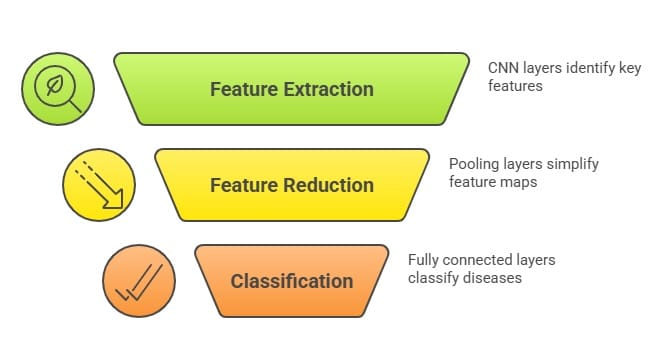
The primary objective of this AI project is to help farmers detect plant diseases at an early stage, allowing timely intervention to prevent crop loss. Early disease detection is critical for maintaining high crop yields and ensuring food security, especially in regions heavily dependent on agriculture. This AI-driven solution empowers farmers to make informed decisions, minimize the use of harmful chemicals, and optimize agricultural productivity. By leveraging artificial intelligence, this project aims to provide an accessible, reliable, and user-friendly tool for the agricultural community.
Description
This AI project uses Convolutional Neural Networks (CNN) to analyze images of plant leaves and classify common diseases such as rust, blight, and leaf spot. The model is trained on extensive datasets like PlantVillage, which contains thousands of labeled leaf images for accurate learning. Once trained, the model is deployed as a mobile application, allowing farmers to upload photos of their crops and receive instant diagnoses. The app provides disease classification, severity levels, and suggested remedies, making it a practical solution for farmers who may not have access to expert agronomists. Additionally, the system can be continuously improved as more images and data are collected, making the model smarter over time.
Challenges
This AI project faces challenges such as poor-quality images, varying lighting conditions, and limited internet connectivity in rural areas. These issues can be addressed using image preprocessing, data augmentation, and offline AI models to improve accuracy and reliability.
Impact
This AI chatbot improves student support by providing instant assistance for academic queries while reducing administrative workload. It also helps CSE students develop practical AI, machine learning, and NLP skills through a real-world application.
3. AI in Astrophysics: Building an Emission Reduction System
Objective
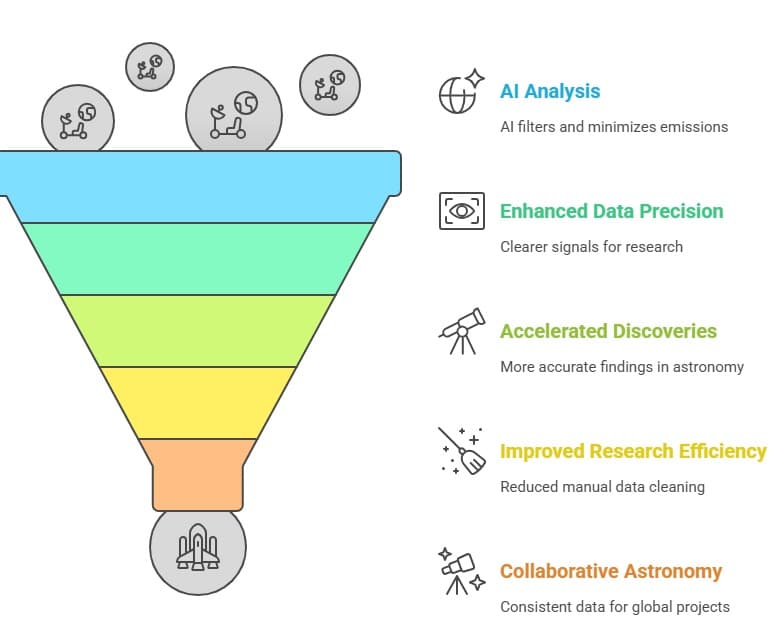
The main objective of this AI projects initiative is to develop a system that analyzes astrophysical data to reduce emission interference in astronomical observations. Emission noise from cosmic sources and terrestrial interference can significantly affect the accuracy of data collected by telescopes and space instruments. This AI projects approach leverages artificial intelligence techniques to filter and minimize these unwanted emissions, providing clearer signals for researchers. By implementing such a system, astrophysicists can enhance the precision of space observations and accelerate discoveries in astronomy and cosmology.
Description
This AI projects effort involves using machine learning algorithms, particularly deep learning models, to detect and suppress emission noise from astrophysical data. Large datasets from radio telescopes, space observatories, and satellite sensors are collected and preprocessed to train the model. The AI system identifies patterns in emission interference and predicts areas where noise reduction is required. By automating the process, it helps astrophysicists focus on meaningful signals rather than manually filtering vast amounts of data. The project can be integrated with data visualization tools and simulation software, allowing real-time monitoring of emission reduction effectiveness.
Challenges
Implementing this project comes with several challenges. One of the primary difficulties is handling the massive volume of astrophysical data generated by modern telescopes. Processing and analyzing these datasets require high computational power and optimized algorithms. Another challenge is differentiating between true cosmic signals and emission noise, as misclassification can lead to inaccurate results. Additionally, variations in data quality from different instruments and environmental factors add complexity to model training. Ensuring the AI system is adaptable to new datasets and evolving emission patterns also requires continuous refinement and validation.
Impact
The impact of this emission reduction system is significant for both scientific research and technological advancement. By providing cleaner and more precise astrophysical data, researchers can make more accurate discoveries about celestial bodies, cosmic events, and the fundamental laws of physics. The system also reduces the time and effort required for manual data cleaning, improving efficiency in research workflows. For students and researchers, this AI projects example serves as an excellent demonstration of applying artificial intelligence to complex scientific problems, highlighting the potential of AI to drive innovation in niche fields like astrophysics. Furthermore, such systems can contribute to global collaborative astronomy projects, where consistent and high-quality data are essential for breakthroughs in space exploration.
Overall, building an emission reduction system using AI in astrophysics is a challenging yet highly rewarding project. It enhances research precision, equips students with practical AI experience, and illustrates the transformative potential of artificial intelligence in scientific discovery.
4. AI-Powered Fake Content Detection
Objective
The primary objective of this AI projects initiative is to develop a system capable of detecting deepfakes, fake news, and manipulated images or videos. With the rapid rise of digital content, misinformation has become a significant challenge across social media, news platforms, and online communication channels. This AI projects solution aims to ensure the authenticity of digital content, protect users from deception, and support credible information dissemination. By leveraging artificial intelligence, the system can automatically identify and flag manipulated content, reducing the spread of misinformation and promoting digital trust.
Description
This AI projects effort utilizes deep learning techniques, including convolutional neural networks (CNNs), to analyze visual and textual data for signs of tampering or manipulation. The system is trained on large datasets containing both authentic and fake media samples, allowing it to learn subtle patterns that distinguish real content from fraudulent content. For video analysis, the model detects inconsistencies in facial expressions, lip-sync errors, and unnatural movements. For images, it identifies signs of manipulation such as pixel irregularities or mismatched lighting. Text-based content is analyzed using NLP algorithms to detect patterns indicative of fake news or misinformation. The system can be deployed as a web or mobile application, enabling real-time verification for users, journalists, and organizations.
Challenges
Implementing this AI projects solution comes with several challenges. One of the main difficulties is the constant evolution of deepfake and manipulation techniques, which require the AI system to be regularly updated and retrained. Handling diverse media formats, compression artifacts, and low-resolution content also complicates detection. Additionally, ensuring low false positives while maintaining high accuracy is critical to prevent legitimate content from being flagged incorrectly. Ethical considerations, such as user privacy and potential misuse of the system, must also be addressed during development.
Impact
The impact of AI-powered fake content detection is substantial for both social and professional contexts. By automatically identifying manipulated media, the system helps combat misinformation, protecting individuals, organizations, and society at large. It enhances the credibility of online platforms and supports responsible content sharing. For final-year CSE students, this AI projects initiative provides hands-on experience in deep learning, computer vision, and NLP, offering an excellent opportunity to apply technical knowledge to real-world problems. Such projects not only strengthen technical skills but also demonstrate the practical application of AI in addressing urgent digital challenges.
5. Intelligent E-Learning Recommendation Engine
Objective
The primary objective of this AI projects initiative is to create an intelligent system that personalizes the learning experience for students. With diverse learning styles and performance levels, one-size-fits-all education often fails to meet individual needs. This AI projects solution leverages artificial intelligence to suggest courses, quizzes, and tailored learning paths based on a student’s performance, preferences, and learning behavior. The goal is to enhance engagement, improve learning outcomes, and provide a more effective educational experience for students.
Description
This AI projects system uses machine learning algorithms and data analytics to monitor student interactions and performance across digital learning platforms. The engine collects data such as quiz results, course completion rates, time spent on modules, and user preferences to generate personalized recommendations. Collaborative filtering, content-based filtering, and hybrid recommendation techniques are applied to suggest the most relevant courses, exercises, and resources. For example, a student struggling with a particular topic may receive additional quizzes and tutorials tailored to their weaknesses, while high-performing students may be suggested advanced topics or challenges. The system can be deployed on e-learning platforms or mobile applications, offering real-time adaptive learning experiences and dashboards for both students and educators.
Challenges
Developing this AI projects solution presents several challenges. One major difficulty is ensuring data privacy and security, as the system relies on sensitive student performance data. Handling incomplete or inconsistent data and maintaining model accuracy across diverse student populations can also be complex. Additionally, designing an engine that adapts in real time to changing learning behaviors requires efficient algorithms and sufficient computational resources. Ensuring fairness and avoiding bias in recommendations is critical to provide an equitable learning experience for all students.
Impact
The impact of an intelligent e-learning recommendation engine is significant for both students and educators. Personalized learning paths increase student engagement, improve understanding of complex concepts, and enhance overall academic performance. Educators benefit from insights into student progress and can intervene where additional support is needed. For final-year CSE students, developing this AI projects initiative provides practical experience in machine learning, data analytics, and software development. It also demonstrates the potential of AI to transform education by offering adaptive, personalized, and effective learning solutions. By implementing such systems, educational institutions can significantly improve learning outcomes while empowering students to achieve their full potential.
6. AI-Based Energy Consumption Optimizer
Objective
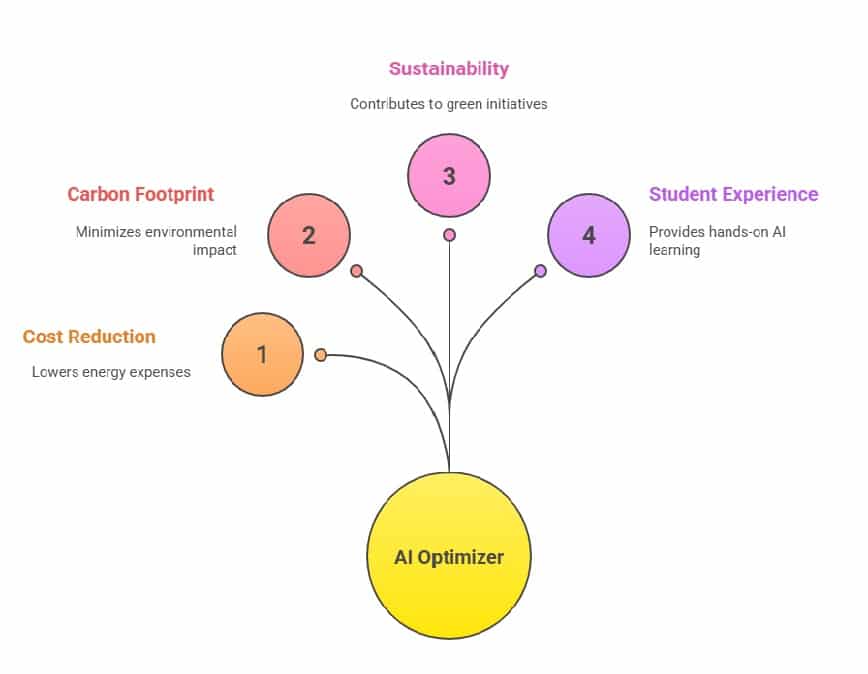
The main objective of this AI projects initiative is to predict and optimize energy usage in smart homes or office environments. With rising energy costs and environmental concerns, efficient energy management is crucial. This AI projects solution leverages machine learning and predictive analytics to monitor energy consumption patterns, provide actionable recommendations, and reduce unnecessary energy usage, helping users save costs and support sustainable living.
Description
This AI projects system collects data from smart meters, IoT devices, and sensors installed in homes or offices. Machine learning models analyze consumption patterns, detect peak usage periods, and predict future energy demands. Based on these insights, the system can automatically adjust lighting, HVAC systems, and appliances to optimize efficiency without compromising comfort. Users can also view personalized reports and suggestions via a mobile app or web dashboard, enabling better energy management and decision-making.
Challenges
Developing this AI-based energy optimizer involves several challenges. Handling large-scale data from multiple IoT devices in real time requires high computational resources. Ensuring model accuracy in predicting diverse energy usage patterns across different households or office setups can be complex. Additionally, integrating with various hardware systems, maintaining data security, and addressing privacy concerns are critical for successful deployment.
Impact
The impact of this project is significant. It helps users reduce energy costs, minimizes carbon footprints, and contributes to environmental sustainability. For students, this AI projects initiative provides hands-on experience with predictive analytics, IoT integration, and machine learning applications. It demonstrates the practical potential of AI in improving daily life and optimizing resource management.
7. AI-Powered Autonomous Waste Sorting System
Objective
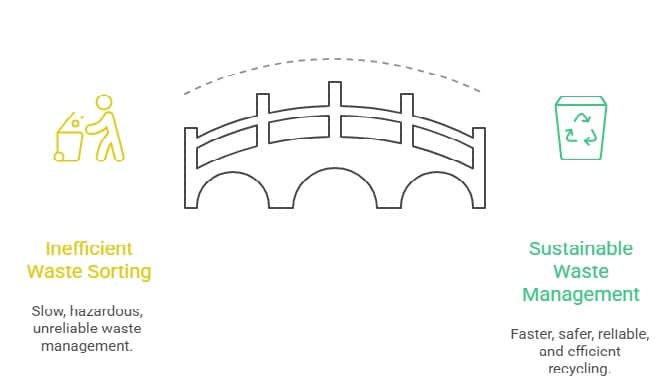
The primary objective of this AI projects initiative is to automate the classification and sorting of recyclable, organic, and non-recyclable waste. With urban waste management becoming increasingly challenging, this system aims to improve efficiency, reduce human effort, and promote environmentally friendly practices.
Description
This AI projects system uses computer vision and deep learning algorithms to detect, classify, and sort waste materials on conveyor belts or collection systems. Cameras capture images of waste items, and the AI model identifies categories such as plastic, paper, organic matter, and metals. The system can then trigger mechanical sorting mechanisms to separate materials automatically. Over time, the system learns and improves its accuracy, making waste management faster, safer, and more reliable.
Challenges
Implementing this AI-powered system presents several challenges. Variability in waste appearance, lighting conditions, and overlapping materials can affect classification accuracy. Training models requires large datasets with labeled waste images. Additionally, designing an efficient real-time sorting mechanism and integrating it with AI systems demands both hardware and software expertise.
Impact
The autonomous waste sorting system has a strong environmental and operational impact. It reduces human exposure to hazardous waste, improves recycling efficiency, and supports sustainable urban management. For students, this AI projects initiative provides practical experience in computer vision, deep learning, and automation, making it a valuable addition to their portfolio. It highlights how AI can solve pressing societal and environmental challenges effectively.
Technologies Needed in AI
Developing AI projects requires a strong foundation in programming languages, libraries, frameworks, and datasets. Choosing the right tools and platforms can significantly impact the efficiency and success of your AI project. Understanding these technologies helps students and professionals design, train, and deploy AI models effectively across various domains.
| Programming Language | Purpose |
|---|---|
| Python | Most popular language for AI projects; easy to learn; supports machine learning, deep learning, and data analysis libraries. |
| R | Ideal for statistical modeling, data analysis, and visualization tasks in AI projects. |
| Java | Suitable for scalable and enterprise-level AI applications; supports AI frameworks and large systems. |
Libraries and Frameworks
Libraries and frameworks like TensorFlow, Keras, and PyTorch provide pre-built functions that streamline model building. OpenCV is essential for computer vision tasks, while NLTK is used for natural language processing. Utilizing these frameworks enables faster prototyping, higher accuracy, and better performance in AI projects.
Importance of Datasets
Datasets are the backbone of AI projects. Sources like Kaggle, UCI ML Repository, and other open-source datasets provide labeled and structured data required for supervised learning, classification, and prediction tasks. Quality and diversity of datasets directly influence model performance and reliability.
Conclusion
In conclusion, AI projects play a crucial role in shaping the skills and career prospects of final-year CSE students. They provide hands-on experience with cutting-edge technologies, enhance problem-solving abilities, and help students build impressive portfolios that attract top recruiters. Working on AI projects allows students to explore real-world applications of machine learning, deep learning, and data analytics, preparing them for the dynamic tech industry. When selecting a project, it is important to consider personal interests, technical feasibility, and the potential impact of the solution. By choosing projects thoughtfully, students can maximize learning and create meaningful outcomes. At ElysiumPro, we encourage students to embrace innovative AI projects that not only strengthen their technical expertise but also contribute positively to society and industry advancements.
Frequently Asked Questions
- Which programming languages and libraries should beginners use for AI projects?
Start with Python, then learn NumPy, Pandas, scikit learn, TensorFlow or PyTorch, plus Jupyter for experimentation. - How do I choose a feasible final year AI project?
Match the topic to available data, timeline, and your skills, define a clear problem statement, success metrics, and baseline to beat. - Where can I find quality datasets for training models?
Use repositories like Kaggle, UCI Machine Learning Repository, Google Dataset Search, or build datasets via web scraping with proper ethics. - What are strong AI project ideas that impress recruiters?
End to end solutions such as fraud detection, sentiment analysis, recommendation systems, medical image classification, chatbots, or demand forecasting with deployment. - How should I document and present my AI project?
Maintain clean code with README, data pipeline diagram, model metrics and comparisons, error analysis, and a small demo app or notebook with reproducible steps.