
Cloud Based Projects for Students: Smart, Secure, and Scalable Computing
January 29, 2026
Ultimate Guide to Mini Projects for ECE Engineering Students
February 18, 2026
Table of Contents
Introduction
The Internet of Things (IoT) is transforming the way we interact with devices, enabling smarter homes, cities, and industries. For beginners, exploring basic IoT projects is an excellent way to gain hands-on experience with sensors, microcontrollers, and cloud connectivity. These projects help learners understand how devices communicate, how data is collected and processed, and how intelligent systems can be built with minimal complexity.
Engaging with basic IoT projects allows anyone to move from theoretical knowledge to practical skills, setting the stage for advanced applications in smart technologies.
Understanding Basic IoT Projects
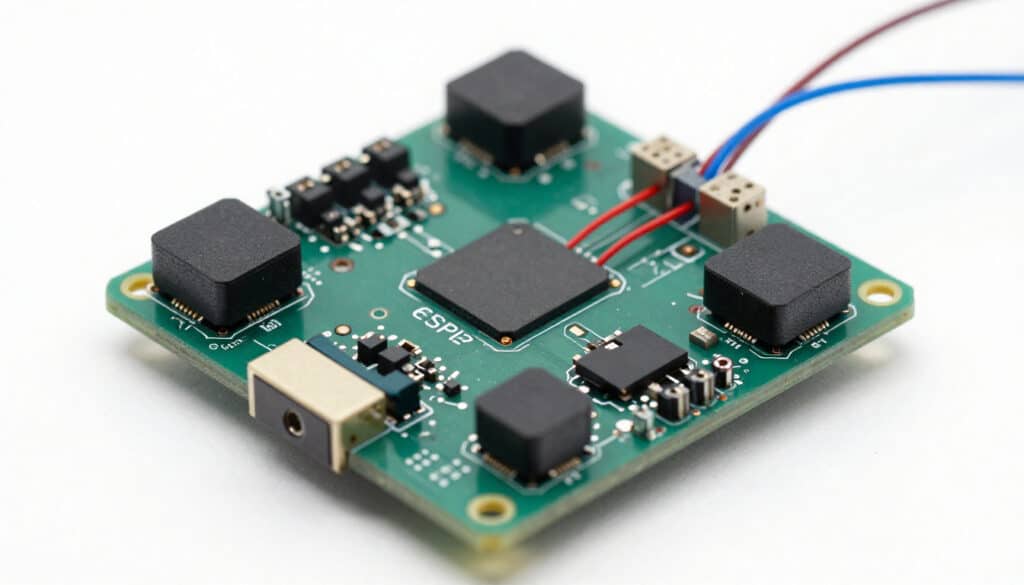
Basic IoT projects are entry-level implementations that demonstrate the principles of IoT. Unlike complex industrial systems, these projects focus on simplicity while still offering meaningful results. They typically involve collecting data from sensors, processing it using a microcontroller or small computer, and transmitting the data to a cloud platform for visualization, analysis, or action.
The purpose of these projects is not just to create functional devices but also to build a foundational understanding of IoT concepts, including connectivity, sensor integration, and cloud-based data management. Basic IoT projects serve as a bridge between classroom theory and real-world applications.
Components of Basic IoT Projects
To build basic IoT projects, a few essential components are required:
1. Microcontrollers and Development Boards
Microcontrollers act as the brain of IoT systems. Common boards for beginners include Arduino, ESP32, ESP8266, and Raspberry Pi. These boards can process sensor data, control actuators, and communicate with cloud services.
2. Sensors and Actuators
Sensors gather data from the environment, such as temperature, humidity, light, or motion. Actuators perform actions based on this data, like turning on a motor, lighting an LED, or activating a relay.
3. Connectivity Modules
Wireless communication is essential for IoT systems. Wi-Fi, Bluetooth, Zigbee, and LoRa are commonly used in basic IoT projects to transmit data from devices to cloud platforms or other devices.
4. Cloud Platforms and Dashboards
Cloud platforms like ThingSpeak, Blynk, and Adafruit IO allow users to store, visualize, and analyze data collected from IoT devices. These platforms make it easy to interact with IoT systems through dashboards, graphs, and alerts.
Applications of Basic IoT Projects
Even at the beginner level, basic IoT projects can have practical applications across multiple areas:
- Home Automation: Controlling lights, fans, and appliances remotely.
- Environmental Monitoring: Collecting data on air quality, temperature, and humidity.
- Smart Agriculture: Monitoring soil moisture and automating irrigation.
- Energy Management: Tracking electricity usage and optimizing consumption.
By working on these projects, beginners gain an understanding of how IoT technology can solve real-world problems, providing practical insights and motivation to learn more.
Benefits of Basic IoT Projects
Engaging with basic IoT projects provides several benefits:
- Hands-On Experience: Learners interact directly with sensors, microcontrollers, and cloud services.
- Conceptual Understanding: These projects teach how data is collected, transmitted, and acted upon.
- Affordable and Accessible: Most components are inexpensive and widely available, making these projects suitable for students and hobbyists.
- Skill Development: Working on IoT projects enhances programming, electronics, and data visualization skills.
Basic IoT projects also encourage creativity, as learners can experiment with different sensors, devices, and connectivity options to explore new solutions.
Challenges in Basic IoT Projects
While basic IoT projects are beginner-friendly, some challenges may arise:
- Connectivity Issues: Ensuring reliable network connections is crucial for accurate data transmission.
- Sensor Calibration: Proper calibration is necessary for accurate readings.
- Power Management: Efficient energy use is important, especially for battery-powered devices.
- Data Visualization: Learning to display data effectively on dashboards or mobile apps can be challenging.
Overcoming these challenges teaches problem-solving skills that are valuable for more advanced IoT systems.
Tips for Successful Basic IoT Projects
To maximize learning from basic IoT projects, beginners should:
- Start Small: Focus on one device or sensor initially before expanding.
- Learn the Basics of Programming: Understanding code helps you modify and troubleshoot projects.
- Use Online Resources: Tutorials and forums can provide guidance and inspiration.
- Simulate First: Tools like Tinkercad or IoT simulators help test ideas without wiring hardware.
- Iterate and Improve: Continuously enhance projects by adding new sensors, features, or dashboards.
These strategies ensure a smoother learning process and help beginners build confidence with basic IoT projects.
The Future of Basic IoT Projects
As IoT continues to grow, basic IoT projects provide a foundation for more advanced areas, including:
- Edge AI Integration: Applying machine learning on microcontrollers.
- Industrial IoT (IIoT): Scaling systems for automation and manufacturing.
- Smart Cities: Implementing IoT solutions for urban infrastructure, traffic management, and utilities.
- Data Analytics: Transforming raw IoT data into actionable insights.
Starting with basic IoT projects ensures that beginners are well-prepared for these emerging technologies, making them more competitive in both academic and professional settings.
Elysium Pro supports students and technology enthusiasts in building real‑world IoT projects by offering comprehensive guidance, hands‑on development, and academic support. As part of its project development services, Elysium Pro provides learners with opportunities to explore the rapidly growing domain of Internet of Things through structured training and implementation assistance. The Internet of Things is an emerging technology where everyday electronics, mechanical devices, and sensors are connected to the internet for remote control, monitoring, and automation, and Elysium Pro emphasizes practical, real‑time solutions in this field.
Through its IoT projects offerings, students gain experience in integrating sensors, microcontrollers, and communication modules with cloud platforms to create systems capable of real‑time data collection and processing. These IoT projects are designed for academic goals such as final‑year submissions and IEEE standards, as well as skill building that prepares learners for careers in automation, smart systems, and embedded technologies. Elysium Pro ensures quality support with documentation, explanation, and development tools that help students understand both the theory and practical aspects of IoT.
Conclusion
Basic IoT projects are an excellent starting point for anyone interested in the Internet of Things. They offer hands-on experience, practical knowledge, and a strong foundation for future learning. By working with microcontrollers, sensors, connectivity modules, and cloud platforms, beginners can create intelligent systems, understand real-world applications, and gain valuable problem-solving skills.
Starting with simple, achievable projects allows learners to gradually expand their expertise. Basic IoT projects bridge the gap between theory and practice, preparing students, hobbyists, and technology enthusiasts for the increasingly connected world of smart devices.
Whether your goal is to explore home automation, environmental monitoring, energy management, or smart agriculture, these projects provide the building blocks for a successful journey in IoT technologies