
Future-Ready IoT Projects for Final Year Students 2026
January 21, 2026
Cloud Based Projects for Students: Smart, Secure, and Scalable Computing
January 29, 2026
Electronics is a fascinating field, and starting with simple circuit projects is one of the best ways to build practical knowledge. Whether you are a student, hobbyist, or someone curious about electronics, these projects can help you understand fundamental concepts while providing hands-on experience. In this blog, we will explore the importance of simple circuits, some beginner-friendly projects, tips for success, and the resources you need to get started.
Table of Contents
Why Start with Simple Circuit Projects?
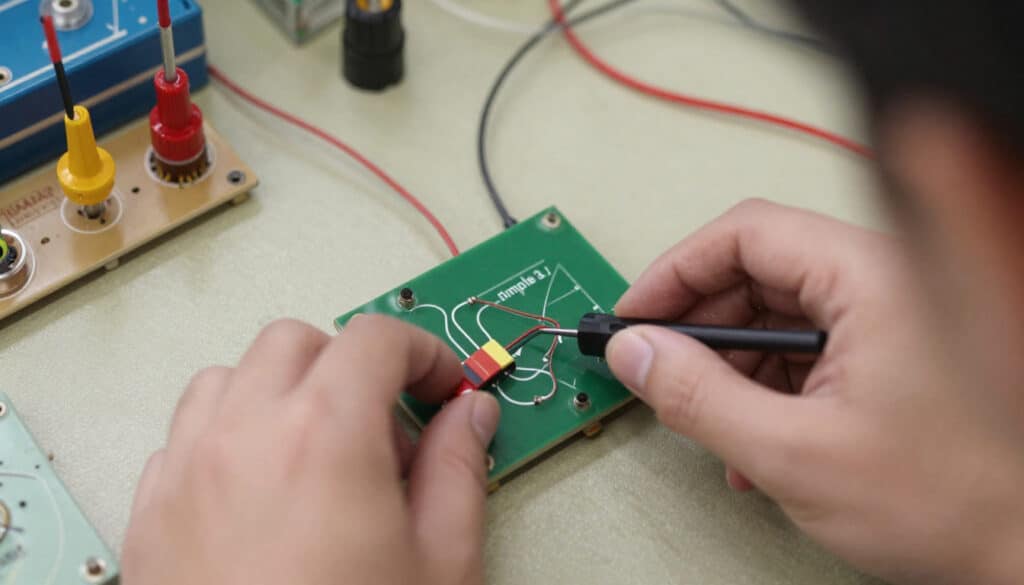
Starting with simple circuit projects helps learners grasp the core principles of electronics without being overwhelmed by complexity. These projects typically involve basic components such as resistors, capacitors, LEDs, transistors, and batteries. Working on them improves your:
- Understanding of circuit components
- Practical soldering and wiring skills
- Problem-solving and debugging abilities
- Foundation for advanced electronics projects
Simple circuits are also cost-effective, allowing learners to experiment without investing heavily in expensive components or kits. They encourage creativity, as you can modify designs and explore your own ideas.
Essential Components for Simple Circuit Projects
Before diving into any simple circuit projects, it’s crucial to know the basic components you’ll need:
Resistors
Resistors control the flow of current in a circuit. They are essential for protecting sensitive components like LEDs from burning out.
Capacitors
Capacitors store and release energy in circuits. They are often used in timing circuits or to smooth voltage fluctuations.
LEDs
Light-emitting diodes (LEDs) are popular in simple circuit projects because they visually demonstrate how circuits work.
Transistors
Transistors can amplify or switch signals in a circuit. They are key for building logic circuits and small amplifiers.
Power Sources
Battery packs or small DC power supplies are commonly used to power simple circuits safely.
5 Beginner-Friendly Simple Circuit Projects
Now that you know the components, let’s explore some easy and fun simple circuit projects that beginners can try:
1. LED Blinking Circuit
One of the most classic simple circuit projects is the LED blinking circuit. Using a 555 timer IC, a resistor, a capacitor, and an LED, you can create a circuit where the LED blinks at a specific rate.
Skills Learned:
- Working with ICs
- Timing circuits
- Basic soldering and wiring
2. Light-Activated LED
This project uses a photoresistor to control an LED. When light falls on the photoresistor, the LED either turns on or off depending on your design.
Skills Learned:
- Understanding light sensors
- Creating automatic circuits
- Integrating sensors with basic electronics
3. Simple Burglar Alarm
A small buzzer circuit can act as a simple alarm triggered by a switch or light sensor. This is a perfect project for beginners wanting to explore security applications.
Skills Learned:
- Switches and sensor integration
- Audible output devices
- Circuit troubleshooting
4. Water Level Indicator
Using a few probes, resistors, and LEDs, you can create a water level indicator circuit. This project teaches how simple logic can be applied to real-world problems.
Skills Learned:
- Logic circuits
- Sensor interfacing
- Real-world applications
5. Traffic Light Simulation
Using LEDs of different colors and a timer circuit, you can simulate traffic lights. This project demonstrates timing sequences and practical electronics applications.
Skills Learned:
- Multi-component sequencing
- Time delay circuits
- Real-world modeling
6. FM Radio Circuit
An FM radio receiver is a fascinating project that allows you to listen to live radio while understanding the basics of frequency, amplification, and signal processing.
Skills Learned:
- Tuning and frequency selection
- Understanding signal amplification
- Basic soldering and wiring
7. Digital Thermometer Circuit
Using a temperature sensor and a digital display, you can measure temperature in real-time. This project teaches the integration of sensors with circuits.
Skills Learned:
- Analog-to-digital conversion
- Sensor interfacing
- Practical electronics applications
8. Electronic Dice
This project uses LEDs to simulate dice numbers when a button is pressed. It is both fun and educational.
Skills Learned:
- Random number generation in circuits
- Timing sequences
- LED control and wiring
9. Sound-Activated LED Circuit
LEDs light up in response to sound, such as clapping or music. This project demonstrates how sensors interact with outputs.
Skills Learned:
- Sensor interfacing
- Signal processing
- Amplification techniques
10. Simple Line Follower Robot
Even with minimal components, you can create a robot that follows a line on the ground. This introduces basic robotics using simple circuit projects.
Skills Learned:
- Motor control
- Sensor-based automation
- Practical robotics fundamentals
Tips for Successfully Completing Simple Circuit Projects
Working on simple circuit projects can be highly educational if you follow some best practices:
- Plan Before You Build: Draw a circuit diagram and understand how current flows.
- Use a Breadboard: It allows you to test circuits without soldering.
- Check Connections Carefully: Loose connections are the most common reason circuits fail.
- Start Small: Begin with low-power circuits to avoid mistakes and component damage.
- Keep Notes: Documenting your experiments helps you learn from mistakes.
Simple Circuit Projects and Their Role in Electrical Engineering
Simple circuit projects are not just beginner exercises—they form the foundation of Electrical Engineering (EE). EE is a broad field covering power systems, electronics, communications, control systems, and signal processing. By working on small circuits, students gain practical exposure to concepts that are central to EE, including:
- Circuit Analysis: Understanding voltage, current, resistance, and Ohm’s law in real circuits reinforces theoretical learning.
- Analog and Digital Electronics: Projects like LED blinkers, buzzer alarms, or sensor circuits introduce analog and digital components, key elements in EE.
- Control Systems: Even basic circuits with switches and relays teach the principles of feedback and control, which are foundational in automation and industrial electronics.
- Signal Processing: Simple circuits that respond to sound or light sensors provide a hands-on glimpse into signal processing concepts used in communications and instrumentation.
- Power Management: Circuits involving LEDs, motors, or small power supplies help students understand energy consumption, efficiency, and practical aspects of electrical design.
By linking simple circuit projects to these EE concepts, students develop a strong practical foundation. This not only enhances learning in the classroom but also prepares them for advanced Electrical Engineering projects, internships, and career opportunities in electronics, robotics, and IoT systems.
The Importance of Hands-On Learning
Many students struggle with theoretical electronics because the concepts can feel abstract. Simple circuit projects bridge the gap between theory and practice. By assembling circuits, you see how current flows, how components interact, and how design choices affect outcomes. Hands-on projects also make learning memorable and enjoyable, which is critical for retaining knowledge.
When you complete even a basic LED blinking circuit or a buzzer alarm, you experience success, which motivates you to tackle more complex circuits like microcontroller-based systems or IoT devices.
How Simple Circuit Projects Help in Learning Electronics
Simple circuit projects are more than just fun—they build a strong foundation for advanced electronics. Here’s why:
- Understanding Theory in Practice: Concepts from textbooks become tangible when you build them.
- Develop Problem-Solving Skills: Troubleshooting faulty circuits teaches persistence and logic.
- Portfolio Building: Projects can be showcased for academic purposes or job applications.
- Confidence Boost: Completing a project motivates you to try more advanced designs.
Practical Benefits Beyond the Classroom
Engaging with simple circuit projects has advantages that extend beyond academic learning:
- Portfolio Development: Documenting your projects demonstrates initiative and technical capability.
- Problem-Solving Skills: Building and debugging circuits teaches resilience and creativity.
- Career Preparedness: Hands-on experience makes students more attractive to employers in electronics, robotics, or IoT industries.
- Innovation Mindset: Simple projects encourage experimentation, which can lead to innovative solutions for practical problems.
Even small circuits, like a water level indicator or a traffic light simulator, illustrate how electronics can solve everyday challenges, providing both learning and practical application.
Where to Find Resources for Simple Circuit Projects
To succeed in simple circuit projects, having access to the right materials and tutorials is key:
- Online Platforms: Websites like Instructables, CircuitDigest, and All About Circuits provide step-by-step guides.
- YouTube Channels: Channels dedicated to electronics projects demonstrate practical assembly and testing.
- Electronics Kits: Beginner kits often include all the components needed to complete multiple simple circuit projects.
- Books & PDFs: Books focused on beginner electronics offer a structured approach to learning.
Conclusion
Simple circuit projects are an excellent starting point for anyone interested in electronics. They provide hands-on experience, teach fundamental concepts, and prepare you for more complex systems. Whether you are a student, hobbyist, or aspiring engineer, experimenting with these projects can boost both your knowledge and your confidence.
Start small, stay curious, and gradually move toward advanced projects. Remember, every complex system starts with a simple circuit. So grab your components, follow a guide, and bring your ideas to life!