
Innovative ECE Engineering Projects for Today’s Students
December 4, 2025
2026 Best Communication Projects for ECE Final Year Students
January 20, 2026
For Electronics and Communication Engineering students, choosing the right VLSI topic can make a major difference in placements, research opportunities, and higher studies. This blog presents ten advanced, industry-oriented final year projects on VLSI that are ideal for students looking to stand out with innovation. Whether you want to focus on digital design, CMOS optimization, FPGA learning, neuromorphic systems, or future semiconductor technologies, these final year projects on VLSI will give you real technical depth and hands-on exposure.
Below, each project is broken down with background, importance, applications, and possible deliverables—making this article a perfect guide for building high-quality final year projects on VLSI.
Table of Contents
1. Reverse Engineering Optimization Techniques of High-Level Synthesis Using AMD–Xilinx Vitis
Overview
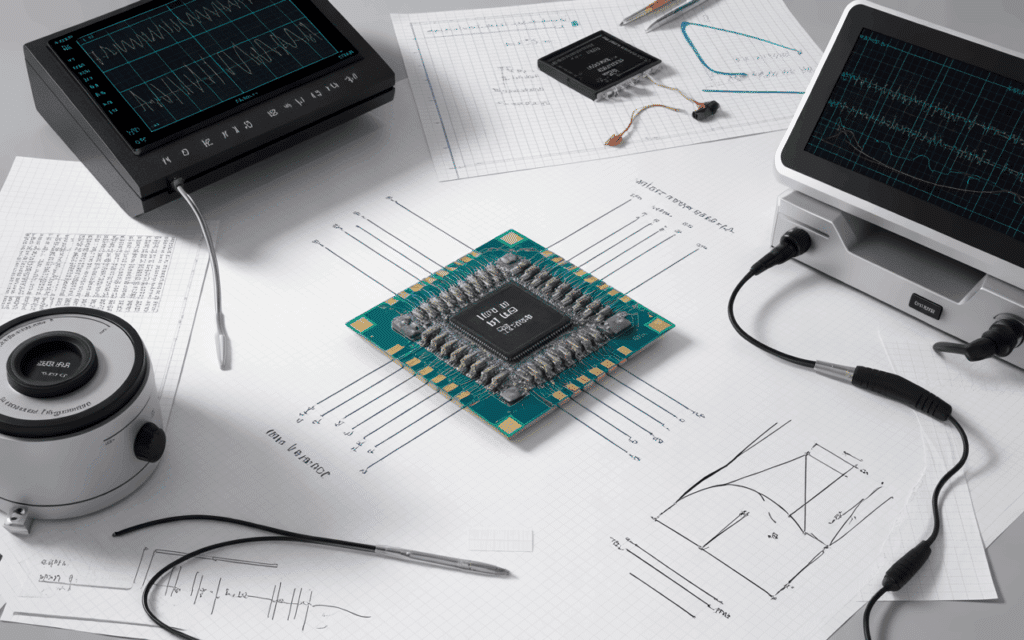
High-Level Synthesis (HLS) tools convert high-level programming (C/C++/OpenCL) into RTL. Reverse engineering optimization techniques help understand how tools like AMD-Xilinx Vitis generate hardware and how design choices affect resource usage.
Why this is a strong VLSI project:
This is one of the most advanced final year projects on VLSI because it teaches students how real industry HLS tools work. You gain insights into:
- Latency vs throughput trade-offs
- Resource mapping
- Scheduling transformations
- Loop unrolling and pipelining
- Architecture-level optimization
Applications
- AI accelerators
- Video processing cores
- Communications baseband blocks
Expected Output
- Simulation insights
- HLS optimization guide
- RTL vs HLS comparison
- FPGA implementation results
2. High-Efficiency Multiply Accumulator Using Ternary Logic and Ternary Approximate Algorithms
Overview
Binary logic is reaching physical limits, making ternary logic (three-state logic) a promising alternative. A Multiply-Accumulate (MAC) unit using ternary logic reduces transistor count and power.
Why It’s Important
MAC units are the backbone of AI accelerators. Among final year projects on VLSI, this one is future-oriented because:
- It reduces power considerably.
- It saves area by using multi-valued logic
- Approximate computing boosts performance.
Project Limitations
- You can do the MAC using:
- Ternary CMOS inverters
- Approximate arithmetic logic
- VHDL/Verilog models
Deliverables
- Ternary truth tables
- Timing/power simulation
- Layout design (optional)
3. Chirality Variation in Optimization of CNTFET Spiking Neurons
Overview
Carbon Nanotube Field Effect Transistors (CNTFETs) are beyond-CMOS devices offering extremely high mobility. Chirality affects conductivity, threshold voltage, and noise.
Why It Is Future-Proof
Neuromorphic circuits using spiking neurons are central to brain-inspired computing. This topic stands out among final year projects on VLSI because it explores:
- CNTFET physics
- Neuron firing models
- Power–delay optimization
Applications
- AI neuromorphic chips
- Next-generation computing
- Cognitive edge devices
Expected Work
- SPICE-based CNTFET simulations
- Chirality vs. Delay/Power Analysis
- Neural architecture modeling
4. Tunable, Energy-Efficient Approximate Circuits for Self-Powered AI and Autonomous Edge Computing
Overview
Approximate circuits intentionally sacrifice small amounts of accuracy to massively reduce power. Self-powered IoT devices and edge AI nodes require extremely low-energy designs.
Why This Project Matters
This is one of the most industry-relevant final year projects on VLSI because:
- Edge computing is rapidly growing.
- Approximate circuits are used in AI workloads
- It powers energy harvesting systems.
Key Terms
- Tunable error rates
- Approximation adaptative
- Ultra-Low-Power Circuit Design
Project Output
- Approximate adders/multipliers
- Power–accuracy trade-off graphs
- ASIC/FPGA implementation simulations
5. Ultra Low Power Fully Static Contention-Free Single-Phase Clock Flip-Flop
Overview
Flip-flops consume a major share of dynamic power in synchronous digital designs. A single-phase clock flip-flop minimizes transitions while ensuring data stability.
Why It’s a Strong Project
It focuses on transistor-level optimization, a core skill for final year projects on VLSI where deep understanding of:
- Static logic
- Clocking techniques
- Contention elimination
- Glitch avoidance
is crucial.
Applications
- Low-power processors
- Wearable devices
- Biomedical sensors
Deliverables
- Transistor-level schematic
- Pre-layout and post-layout simulation
- Clock-to-Q delay & setup/hold analysis
6. Defect and Fault Tolerance in VLSI and Nanotechnology Systems (DFTS 2023 Topic Exploration)
Overview
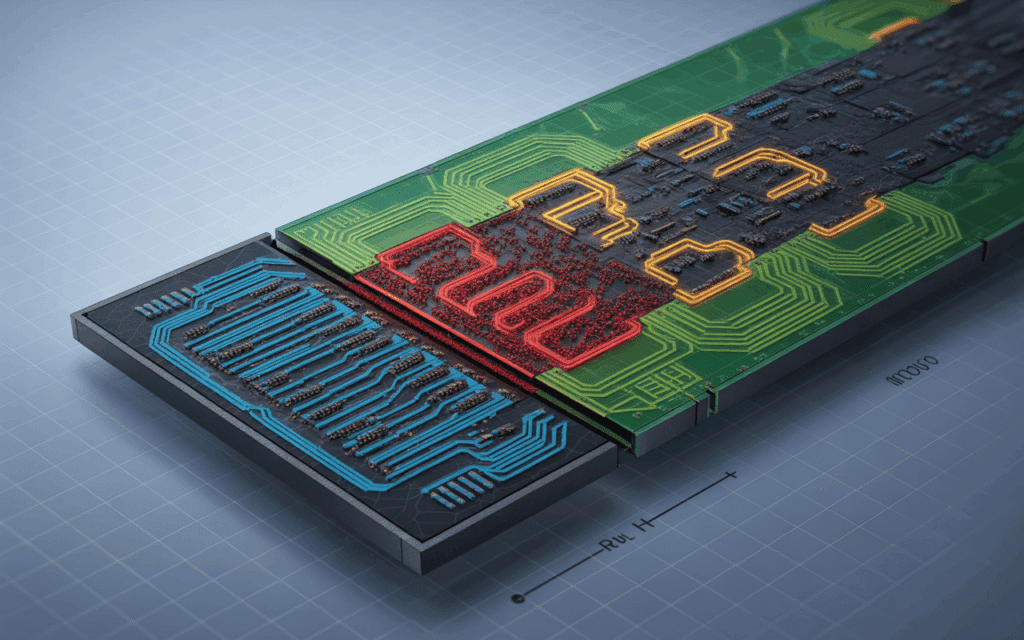
As VLSI technology reaches nanometer scales, defect rates increase. Fault-tolerant circuits ensure reliable operation even in the presence of manufacturing defects.
Why This Is Important
A strong choice for students interested in reliability-focused final year projects on VLSI, covering topics like:
- Redundancy techniques
- Error correcting codes
- Fault-tolerant logic synthesis
- Yield optimization
What You Will Build
- Fault-tolerance logic blocks
- Defect simulation models
- Yield-enhancement algorithms
7. Voltage Stacking based 65-nm CMOS Downconverter-Less Clock Generator
Overview
Clock generators in IoT devices must be compact and power-efficient. Voltage stacking (combining blocks in series) allows operation at ultra-low voltages.
Why It’s An Excellent VLSI Project
- This project combines:
- Clock design
- Low-power CMOS
- Analog/mixed-signal design
Among final year projects on VLSI, this is ideal for students aiming for semiconductor industry roles.
Expected Outcomes
- 65 nm CMOS scheme
- Phase noise analysis
- Power–frequency optimization
8. Rule-Based Reinforcement Learning on FPGA for QoS-Aware Dynamic Frequency Scaling
Overview
Dynamic Frequency Scaling (DFS) adjusts operating frequency to save power while maintaining performance. Using Reinforcement Learning (RL) makes DFS smarter.
Why It Stands Out
This project connects FPGA, ML, and hardware optimization. This makes it perfect for final year projects on VLSI at the intersection of AI and hardware.
Application
- CPUs
- IoT nodes
- Real-time systems
Deliverables
- RL model
- Hardware implementation
- Frequency–power–QoS graphs
9. New Paradigms in CMOS Integrated Sensing System-on-Chip
Overview
Sensing SoCs combine analog front-end, signal processing, and digital control in a single chip. Emerging technologies include:
- Low-noise amplifiers
- On-chip ADCs
- Energy-efficient signal processors
Why It Is Valuable
This is one of the most practical final year projects on VLSI, especially for students entering the sensor/automotive/IoT industries.
Output
SOM-based SoC architecture
Analog + digital block design
SPICE + HDL simulations
10. Hardware–Software Stitching Algorithm for Lightweight Q-Learning SoC
Overview
This project focuses on optimizing Q-Learning hardware through intelligent hardware–software partitioning. Lightweight SoCs need efficient distribution of tasks between hardware accelerators and software processors.
Why It’s a High-Impact VLSI Project
It combines:
- VLSI architecture
- AI optimization
- Embedded SoC design
This makes it one of the most cutting-edge final year projects on VLSI, especially for students targeting research.
Project Deliverables
- Q-learning core
- Stitching/partitioning algorithm
- FPGA/ASIC Simulation Results
Conclusion
These ten final year projects on VLSI represent the most impactful, industry-ready, research-oriented opportunities for ECE students. From neuromorphic circuits and CNTFETs to FPGA-based reinforcement learning and next-generation CMOS systems, each project offers technical depth, innovation, and strong resume value. Whether your interest is digital design, analog circuits, embedded hardware acceleration, or post-CMOS devices, this list of final year projects on VLSI will help you build a powerful academic portfolio.
If you’re looking for final year projects on VLSI that can also lead to research papers or semiconductor job opportunities, these topics are excellent starting points. In summary, these advanced final year projects on VLSI provide a clear path for students who want to build strong technical expertise and stand out in the competitive electronics field.