
Biomedical Engineering Projects for Students
February 27, 2026
Cyber Security Projects: A Complete Software-Focused Guide
March 16, 2026
For students pursuing Electronics and Communication Engineering, the final year of the course is a memorable phase. It is the time when the concepts learned over several semesters are finally put into practice. Among all the academic requirements, the final year project is considered one of the most important. This is where students get the opportunity to design, experiment, build, and demonstrate something of their own. Because of this, ece final year major projects hold a special place in the academic journey of every ECE student.
Unlike regular assignments or lab experiments, the final year project requires deeper thinking, careful planning, and continuous effort. It allows students to combine different areas of electronics and communication engineering and develop a complete working system. The project not only helps in academic evaluation but also gives students confidence in handling real-world technical problems.
Many students initially feel unsure about how to approach their ece final year major projects. Some worry about choosing the right topic, while others are concerned about implementation or documentation. However, with proper planning and a clear understanding of the objectives, the project development process can become a valuable learning experience.
Table of Contents
Importance of ECE Final Year Major Projects in Engineering Education
Engineering education is designed to build both theoretical understanding and practical skills. While classroom lectures provide the theoretical base, projects help students apply those concepts in real situations. This is exactly why ece final year major projects are included as a core requirement in most engineering programs.
A final year project allows students to demonstrate what they have learned during their course. It encourages them to think independently and explore solutions using electronics and communication technologies. Instead of simply following instructions, students take responsibility for planning, designing, and building a system from scratch.
Another reason ece final year major projects are important is that they prepare students for industry expectations. In professional environments, engineers are often required to solve problems, develop prototypes, and work with teams. The experience gained while working on a final year project reflects many of these real-world situations.
The project also gives students an opportunity to understand how different subjects are connected. Concepts from electronics, communication systems, programming, and signal processing often come together during project development. This integrated learning experience is one of the most valuable aspects of final year engineering education.
Planning and Preparation for ECE Final Year Major Projects
The success of a project often depends on how well it is planned. When students begin working on ece final year major projects, the first step is usually identifying a suitable area of interest. Some students may prefer working with embedded systems, while others might be interested in communication technologies or automation systems.
After selecting a general area, the next step is to research existing technologies and applications. Reading research papers, technical articles, and industry examples can help students understand how similar systems work. This research stage is important because it allows students to identify possible improvements or modifications.
Once the idea becomes clearer, students can begin designing the structure of their ece final year major projects. This involves deciding the components, software tools, and methods required for implementation. Creating a basic plan or project outline helps teams stay organized and manage their work effectively.
Time management also plays an important role during the planning stage. Final year projects usually take several months to complete, so dividing the work into smaller phases makes the process easier. Each phase can include tasks such as design, hardware setup, programming, testing, and documentation.
Learning Through Practical Implementation
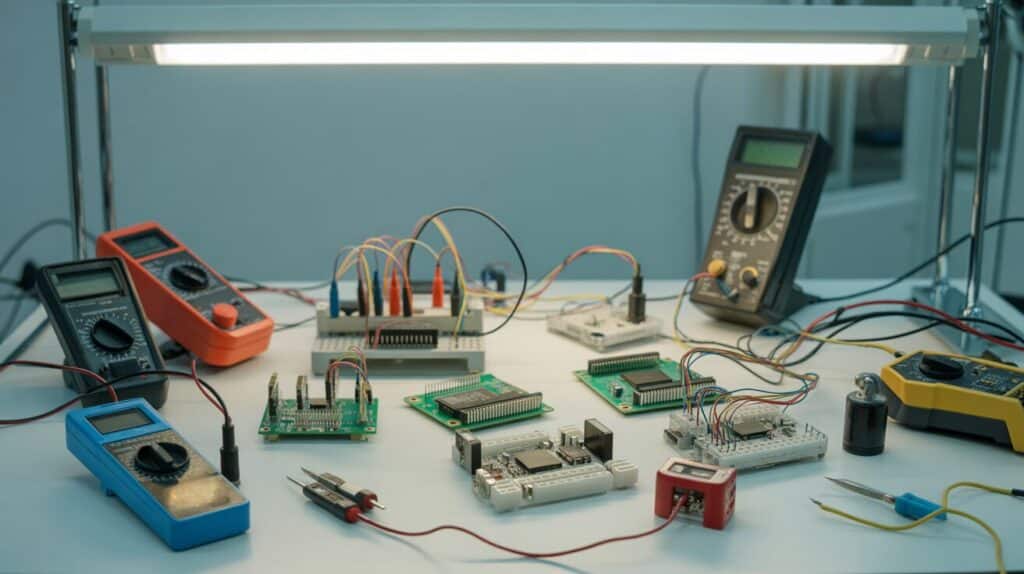
One of the most rewarding parts of working on ece final year major projects is the practical experience gained during implementation. Students move beyond theoretical diagrams and begin working with real electronic components and systems.
Building a project often involves assembling circuits, writing programs, connecting sensors or communication modules, and testing different configurations. These activities help students understand how electronic systems behave outside the classroom environment.
During implementation, students frequently encounter unexpected problems. A circuit may not function as expected, or a program may produce errors. Troubleshooting these issues requires patience and analytical thinking. Although these challenges can be frustrating at times, they are also valuable learning opportunities.
Through this process, ece final year major projects help students develop confidence in their technical abilities. Instead of relying only on textbooks, they learn how to experiment, observe results, and make improvements. This hands-on experience is extremely useful when students enter professional engineering roles.
Skills Developed During ECE Final Year Major Projects
Working on a final year project helps students develop a wide range of skills that are useful beyond academic studies. While technical knowledge is important, other abilities such as communication, teamwork, and problem-solving are equally valuable.
In most cases, ece final year major projects are completed in groups. Each team member contributes to different parts of the system, such as circuit design, programming, testing, or documentation. This collaborative approach teaches students how to share responsibilities and coordinate tasks effectively.
Communication is another skill that improves during project development. Students must explain their ideas to teammates, project guides, and evaluators. Being able to present technical concepts clearly is an important ability for engineers in any field.
Time management is also strengthened while working on ece final year major projects. Since projects have deadlines and evaluation schedules, students learn how to organize their tasks and complete work within a limited timeframe.
Perhaps the most important skill gained from this experience is problem-solving. Engineering projects rarely progress exactly as planned. Students must think creatively and adapt to challenges as they arise.
Common Challenges Faced During ECE Final Year Major Projects
Although final year projects provide valuable learning opportunities, they can also be challenging. Many students experience difficulties at different stages of project development.
One of the first challenges in ece final year major projects is selecting an appropriate concept. Some students choose ideas that are too complex, while others may struggle to find a concept that is both innovative and practical. Guidance from faculty members often helps students refine their ideas.
Another challenge is integrating hardware and software components. Electronic systems often involve multiple modules that must work together smoothly. Ensuring proper communication between components requires careful testing and adjustments.
Limited resources can also create difficulties. Students may need specific components or development tools that are not easily available. In such cases, teams must look for alternative solutions or modify their designs.
Despite these obstacles, overcoming challenges is part of the learning process. The experience gained while solving problems during ece final year major projects prepares students for real engineering tasks in the future.
Documentation and Project Presentation
In addition to building the system, students must also document their work properly. Documentation is an essential part of ece final year major projects because it explains the technical details and methodology used during development.
A project report usually includes sections such as introduction, system design, implementation, testing results, and conclusions. Writing these sections helps students organize their ideas and describe their work clearly.
Presentation is another important stage. At the end of the project period, students typically demonstrate their systems to faculty members or evaluation panels. This demonstration allows them to showcase the functionality of their project and explain the design process.
Preparing for presentations encourages students to understand every aspect of their ece final year major projects thoroughly. When students are able to explain their work confidently, it reflects their understanding and dedication.
Career Advantages of ECE Final Year Major Projects
The experience gained from final year projects can play a significant role in shaping a student’s career. Employers often look for candidates who have practical knowledge and hands-on experience with engineering systems.
Well-executed ece final year major projects can serve as strong examples of a student’s capabilities during job interviews. Recruiters may ask questions about the project design, challenges faced, and solutions implemented. Being able to discuss these details demonstrates technical competence and problem-solving ability.
Final year projects can also help students discover their areas of interest. Some may develop a passion for embedded systems, while others might become interested in communication technologies or electronics design. This understanding can guide students when choosing career paths or higher education options.
In some cases, ece final year major projects even inspire innovative ideas that lead to research opportunities or entrepreneurial ventures. Students who continue developing their projects may transform them into advanced prototypes or commercial applications.
Conclusion
The final year project is one of the most meaningful experiences in an engineering student’s academic life. Through ece final year major projects, students move beyond theoretical learning and begin applying their knowledge to practical challenges.
The process involves planning, research, design, implementation, and presentation. Each stage contributes to the development of technical expertise and professional skills. Students learn how to collaborate with teammates, solve complex problems, and communicate their ideas effectively.
Although the journey may include challenges and setbacks, the knowledge gained from ece final year major projects is invaluable. It prepares students for careers in electronics and communication engineering while also building confidence in their ability to innovate and create.
By approaching the project with curiosity, dedication, and a willingness to learn, students can turn their final year experience into a strong foundation for their future in technology and engineering.
FAQ
1. What are ECE final year major projects?
ECE final year major projects are large academic projects completed by Electronics and Communication Engineering students during their final year of study. These projects allow students to apply theoretical knowledge from electronics, communication systems, and embedded technologies to build practical solutions or working prototypes.
2. Why are ECE final year major projects important for students?
ECE final year major projects are important because they help students gain practical experience and develop technical skills. They also improve problem-solving abilities, teamwork, and technical presentation skills, which are essential for engineering careers and higher studies.
3. How should students choose a topic for ECE final year major projects?
Students should choose a topic based on their area of interest, the technologies they want to learn, and the feasibility of completing the project within the available time. Researching current technology trends and consulting with faculty members can help students select a suitable project direction.
4. What skills can students gain from working on ECE final year major projects?
By working on ECE final year major projects, students can develop skills such as circuit design, programming, system integration, problem-solving, and technical documentation. These skills help students become more confident and prepared for real-world engineering challenges.
5. How can ElysiumPro help with ECE final year major projects?
ElysiumPro supports students by providing guidance, training, and project development assistance for ECE final year major projects. Their programs often include technical mentoring, practical implementation support, and documentation guidance to help students successfully complete their projects.