
CSE Final Year Project with Source Code
March 18, 2026
A deep learning project is not just another checkbox in a portfolio—it’s a practical demonstration of how machines can learn patterns, make decisions, and solve complex problems. If you’ve ever been fascinated by how recommendation systems know your taste or how apps recognize faces instantly, then you’re already seeing the output of a well-executed deep learning system.
This guide walks you through the full journey of designing and executing a meaningful project, from idea selection to deployment, without fluff or generic advice. It’s written to reflect real-world challenges, decisions, and trade-offs.
Table of Contents
Why a Deep Learning Project Matters More Than Theory
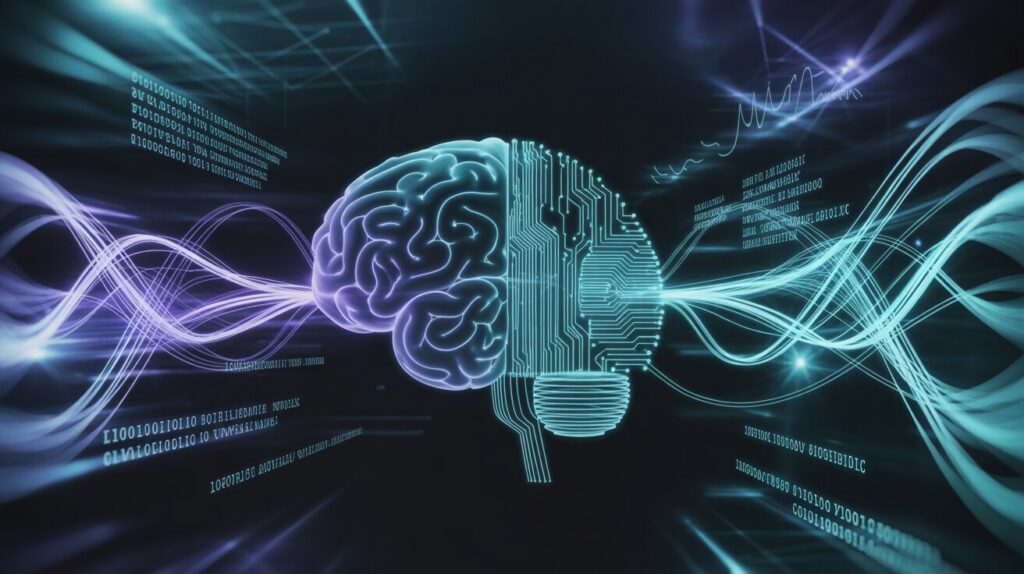
Learning concepts like neural networks or backpropagation is one thing. Applying them in this projects forces you to deal with messy datasets, imperfect results, and performance constraints.
When you actually build something:
- You understand why models fail, not just how they work
- You learn data preprocessing, which takes up most of the effort
- You gain intuition about tuning models rather than guessing
Employers and researchers don’t look for people who “know deep learning.” They look for those who have built a deep learning project that works under real constraints.
Choosing the Right Deep Learning Project Idea
Picking the right problem is half the battle. A good project idea should meet three criteria:
- Clear objective – What exactly are you predicting or generating?
- Available data – Without data, there’s no project
- Measurable outcome – Accuracy, loss, or business impact
Practical Ideas That Actually Work
Instead of overused examples, consider:
- Detecting crop diseases from leaf images
- Identifying fake product reviews using text classification
- Predicting traffic congestion using time-series data
- Analyzing handwritten prescriptions in healthcare
Each of these can become a solid deep learning project with real-world relevance.
Data Collection: The Backbone of Any Deep Learning Project
Data is where most projects struggle. You can’t shortcut this phase.
Sources include:
- Public datasets (Kaggle, UCI Repository)
- APIs (Twitter, Google Maps)
- Custom data collection (scraping or sensors)
In a serious deep learning project, you’ll spend more time cleaning data than building models.
Common Data Issues
- Missing values
- Imbalanced classes
- Noisy labels
- Inconsistent formats
Fixing these issues determines whether your deep learning project succeeds or fails.
Data Preprocessing and Feature Engineering
Before feeding data into a model, it must be structured properly.
For images:
- Resize and normalize
- Data augmentation (flip, rotate)
For text:
- Tokenization
- Removing stopwords
- Word embeddings
For tabular data:
- Scaling and encoding
A well-prepared dataset can improve your project more than any fancy architecture.
Model Selection for a Deep Learning Project
Choosing the right model depends on your problem type.
For Image-Based Tasks
- Convolutional Neural Networks (CNNs)
For Sequential Data
- Recurrent Neural Networks (RNNs)
- LSTM and GRU
For Advanced Tasks
- Transformers
Don’t overcomplicate things. Many beginners ruin this projects by choosing complex models without understanding them.
Training the Model: Where the Real Work Begins
Training isn’t just pressing “run.”
Key elements include:
- Loss function selection
- Optimizer choice (Adam, SGD)
- Learning rate tuning
- Epoch selection
In a practical deep learning projects, you’ll train multiple times, each time refining your approach.
Overfitting vs Underfitting
- Overfitting: Model memorizes training data
- Underfitting: Model fails to learn patterns
Balancing these is critical in any deep learning project.
Evaluation Metrics That Actually Matter
Accuracy alone is misleading.
Use:
- Precision and recall
- F1-score
- Confusion matrix
- ROC-AUC
Deployment: Turning Your Deep Learning Project into Reality
A project isn’t complete until it’s usable.
Deployment Options
- Web apps (Flask, Django)
- Mobile apps
- Cloud APIs
Imagine building a disease detection model—deploying it allows farmers to use your deep learning project directly.
Challenges You Will Face in a Deep Learning Project
Every meaningful project comes with obstacles:
- Lack of high-quality data
- Long training times
- Hardware limitations (GPU/TPU)
- Debugging model performance
These challenges are not roadblocks—they are the learning experience of a deep learning project.
Tools and Frameworks You Should Use
A strong tech stack makes your workflow smoother.
- TensorFlow
- PyTorch
- Keras
- OpenCV (for image processing)
- NLTK / SpaCy (for NLP)
Choosing the right tools simplifies your deep learning project and reduces unnecessary complexity.
Real-World Use Cases
A good project should connect to real-world applications:
- Healthcare: Disease detection
- Finance: Fraud detection
- Retail: Recommendation systems
- Transportation: Autonomous driving
When your deep learning project solves a real problem, it becomes valuable beyond academics.
Techniques to Improve Performance
- Hyperparameter tuning
- Dropout layers
- Batch normalization
- Transfer learning
Documentation and Presentation
Even the best project fails if it’s not communicated well.
Include:
- Problem statement
- Dataset details
- Model architecture
- Results and insights
A well-documented deep learning project stands out in interviews and research discussions.
Common Mistakes to Avoid
- Jumping into coding without understanding data
- Using overly complex models
- Ignoring evaluation metrics
- Not validating results
Future Scope of Deep Learning Projects
Emerging areas include:
- Generative AI
- Explainable AI
- Edge AI (running models on devices)
Artificial Intelligence in Deep Learning Project
Artificial Intelligence (AI) is the foundation behind every deep learning project, enabling machines to learn and make decisions.
It allows systems to perform tasks like image recognition, text analysis, and prediction.
The Artificial intelligence comes from neural networks learning from large datasets.
AI also helps improve accuracy as the model is trained with more data.
Final Thoughts
A deep learning project is where theory meets reality. It challenges you to think critically, solve problems creatively, and deal with imperfections in data and models. Instead of aiming for perfection, aim for progress—build something that works, learn from it, and improve.
That’s how real expertise is developed.
Frequently Asked Questions
1. How do I choose the best deep learning project topic?
Start with a problem you understand or care about. Check if data is available and whether the problem can be measured clearly. Avoid overly complex ideas at the beginning.
2. How much data is required for a deep learning project?
It depends on the problem. Image models typically need thousands of samples, while NLP models can sometimes work with less if pre-trained embeddings are used.
3. Can I complete a deep learning project without a GPU?
Yes, but it will be slower. You can use cloud platforms like Google Colab or AWS to speed up training.
4. What is the role of ElysiumPro in a deep learning project?
ElysiumPro is often considered a support platform that provides guidance, datasets, and structured project workflows. It can help beginners understand implementation steps, but you should still focus on learning the core concepts yourself.
5. How do I make my deep learning project stand out?
Focus on:
- Real-world relevance
- Clean implementation
- Proper evaluation
- Clear documentation
A unique problem statement combined with strong execution makes your project memorable.